Inquiry into the 2020 General Election and Referendums
Submission from the Aotearoa Legalise Cannabis Party
Thank you for this opportunity for the public to have its say on New Zealand’s Representative Democracy.
We appreciate the guidance of the four themes presented and will comment accordingly.
Introduction:
THE REFERENDUMS
We submit that the running of the two referendums together was potentially problematic and it has proven to be so with many mixed messages coming at the public involving two referendums.
The Referendums were unfair as inevitably it looked more like a competition between two referendums, in which one looked like the ‘minor’ player in the way that the wording of the two referendums were laid out for the public to read. In the first instance the public were informed there would be a long awaited and promised referendum on cannabis. The cannabis community were very happy with this after waiting 45 years since the Misuse of Drugs Act was introduced without any scientific proof to persecute, prosecute and criminalise a harmless and otherwise law- abiding community resulting in the criminalisation of hundreds of thousands of our citizens being criminalised, vilified and treated as second class citizens since this time.
The cannabis community were horrified when they heard there would be another referendum, The End of Life Referendum, attached to our first promised Cannabis Referendum. There were concerns that this distraction, would help set it to fail. Our fears were realised when we saw the way the wording of the referendums were run together with the End of Life Bill in front in capitals, followed by ‘and cannabis’ in lower case – with no proper explanation in the title that it was a Bill not cannabis that people were voting on. Nowhere in the commercial world would that be regarded as equal billing or acceptable. This either represents incompetence or deliberate attempt to side -line the Cannabis Legalisation and Control Bill like some inconvenient add on, that does not really count. The wording of the referendums were neither impartial or fair. Even the then Justice Minister Hon. Andrew Little 30/10/20 stated to media “I think some people thought it was a vote on whether or not we have cannabis in our communities, as opposed to how we control it”. This confirms the failure of the Electoral Commission to understand or communicate what they were doing or saying in relation to the Cannabis Referendum creating lack of clarity and confidence in the process.
THE ELECTION
In regard to the election itself, as a political party we found the payment system of the accounts department chaotic, compared to other previous elections with some businesses waiting more than a month to have their accounts paid. This is unacceptable and unprofessional and hope these problems will be sorted before the next election.

  1. The resilience of our electoral system in the face of civil emergencies with particular focus on lessons learned from the covid 19 pandemic.
    Under the circumstances of the pandemic, we feel that the government and Electoral Commission did exceptionally well. First to postpone was wise and to continue was bold but they did what had to be done and managed it well, protecting the safety of the population as best as they could from the
    pandemic and it worked. There are always lessons to be learned and we have confidence in the electoral system to be resilient.
  2. The integrity and security of our electoral system in light of emerging challenges with particular focus on technology and social media.
    The integrity of the system is challenged and put at risk by the rise and dominance of social media businesses controlled off- shore by foreign entities outside jurisdiction of New Zealand Law. The Aotearoa Legalise Cannabis Party was particularly affected by this by being denied access to Google and Face book because we have the word cannabis in our name and therefore our advertising.
    Google and Facebook outright refused to take our government paid for advertising This issue was unresolvable with Google seriously influencing our ability to have a fair debate.
    After many days trying to communicate with face book, even being given the number and name of the manager of face book in Australia by the Electoral Commission, they still refused our advertisements. We went back to the Electoral Commission and finally one of the members of the Electoral Commission, Aimee Bell, intervened on our behalf ringing Australia direct and we managed to get our ads in the last two weeks of the election on to face book social media but google refused. This treatment was just so totally unfair – no level playing field on social media when they can dictate the rules outside of New Zealand law.
    Statement from Peter Hatherley the ALCP Media manager.
    “Even after approving the campaign in principle with face book, we still had to do battle ad by ad to promote our point of view to the voters. I had to approach them on nearly every occasion. As the ALCP Media contact I taped a zoom consultancy with face book contact where we discussed this dilemma during the election campaign and this can be provided, if required. It is interesting to note that what was promised, did not occur and it was a very start – stop campaign, even after the promise that we would be unrestricted. The campaign although, reached nearly one million people but would have reached double this amount if we had been unrestricted, and that would have had a significant impact on the result of the referendum in my opinion”.
    We propose there needs to be work done in this area to ensure this does not happen again.
    The other damning fact is that SAM and Family First with their “Nope to Dope’ overseas funded campaign with fake news at a new low in New Zealand politics, had free reign in social media
    Fake News Examples/False Advertising
    Example One – The portrayal of a country dairy shop turned into a cannabis shop – with cannabis advertising on it was completely false but, highly influential, when it was stipulated that nothing like this (no advertising of cannabis), would be allowed in the proposed law. This was deliberate misrepresentation of what would be allowed as, in the proposed law under the Bill, the advertising of cannabis is not allowed.
    Example Two – The misuse of wheel- chair bound amputee Neville Yates, Medical Cannabis Campaigner image, by SAM and Family First in social media, where he was shown smoking a cigarette, but it was portrayed as a cannabis joint. The irony is that Neville had been given 6 months to live and was technically legally allowed to consume cannabis. The tragedy is that medicinal cannabis is not available for the poor, therefore they are forced to get their cannabis from the black market anyway.
    The image was published 8th July 2020 for a continuous period – Neville saw it and was very upset about it. He has been to jail twice and criminalised for standing up for his right for his medical consumption and did not need an upset like this, in his last 6 months of life, to be targeted with an absolute lie. A complaint was made to the Advertising Standards Authority about misrepresentation of Neville Yates image but nothing was done about it. Neville died 14th February early this year tragically never having been able to access legal cannabis.
    The dangers are of foreign influence deciding what can and cannot be seen in our New Zealand political world. Our point is the ALCP are a legitimate government funded political organisation, who were shut out of social media, and fake news proponents such as SAM and Family First were allowed free reign. Thus assisting, to influence unduly the course of the referendum.
  3. The Rise of advance voting with particular focus on whether any rules governing the regulated period should change in light of the increase in advance voting.
    There are positive and negatives with advance voting.
    For certain people, may be an advantage, but they may be voting before they have heard ‘the whole story’ as in the example of the New Zealand Medical Association that changed its stance on the Cannabis Legalisation and Control Bill by which time over 1 million early votes had already been cast. One would have to objectively say that such a well- respected organisation such as the NZMA would have huge influence on people’s confidence about voting ‘yes’ on the Cannabis Legalisation and Control Bill. We believe the NZMA message against cannabis did mis inform and dissuade the public from voting yes – giving the No vote an unfair advantage and assisting to lose the referendum on the Cannabis Bill, significantly influencing the outcome.
    Under normal conditions without covid, we think one week is more than sufficient if we were to extend the voting period as information and circumstances can sometime change drastically in the community changing shifts in thinking as we witnessed with the about turn of the NZMA.
  4. The accessibility of the voting system for people with disabilities and New Zealand’s growing ethnic communities whose first language may not be English.
    Our questions here are:
    (a) Why were there no lists of the candidates sent out to the voters as has been in the past?
    (b) Why were there no lists in some of the voting stations? eg the Cardboard Cathedral in Ch Ch which is no backwater.
    Visual sighting of whom you are voting for is half of the democratic process. By not seeing the candidates list, it does not assist people with any type of disability to have a better picture of whom they are voting for.
    These lists of the people standing are important to be seen to assist the voter in their considerations by showing the identification of who they are voting for.
    We recommend you bring the candidate lists back for the next elections.
    Chairperson of the Justice Committee, Ginny Anderson MP “is keen to hear what the public thinks how our democracy is going?”
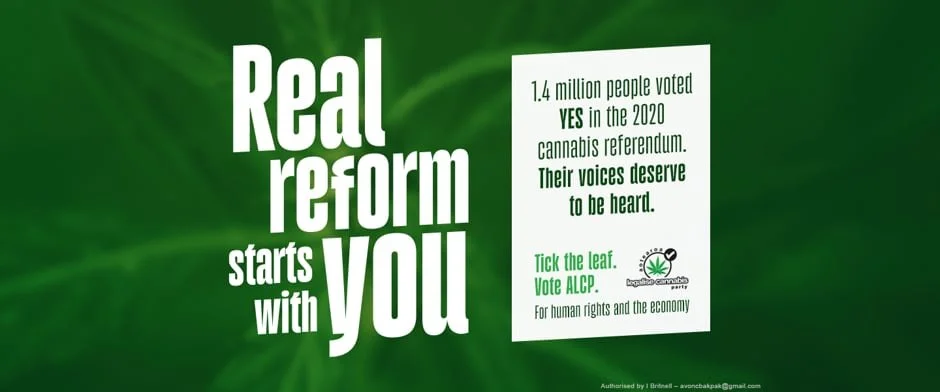
    (a) Our answer to that is to look at the status of the result of the Cannabis Referendum. The Yes vote at 48.4% lost by 1.6% of the vote and the NO vote at 50.7% won by only .7 of 1% so that approximately 50% of the people are able to continue to criminalise the other 50% of our citizens, Indicating that democracy is not working if we have this type of prohibition tyranny continuing to be perpetuated upon the cannabis community. To keep the law as it is, is the oppression of the minority by the bare majority. We would like to at least see an interim step of decriminalisation pending the inevitable legalisation in this inexorable journey of crime perpetuated against humanity.
    It is ironic that you can now kill yourself legally but, you are not allowed to do it on cannabis.
    (b) Public view on the Maori roll. Yes, Maori voters should be able to change rolls more easily. We would like to see the Crown working more collaboratively with Maori (Te Kawanatanga and Tangatawhenua).
    In regard to : Te Tiriti o Waitangi – Tangatawhenua are guaranteed:
    Article 1 – Mana Motuhake – which means self -determination. Total self- responsibility of one’s life.
    Article 2 – Tino Rangatiratanga which means sovereignty. Total governorship.
    Article 3 – Mahi o nga Tuure means framing the laws.
    Article 4 – Kaitiaaki means we are caretakers of the world – land, fisheries, water and environment.
    It is felt by the Tangatawhenua that again we lost out on the cannabis referendum. The question was a loaded question with no guarantees or safety nets for Tangatawhenua.
    There needs to be more education for Maori and New Zealanders as to what our Maori roll is and more access to be able to switch rolls for Maori. At present it takes 5 x years before changes can be made. We could do this when enrolment packs are sent out.
    (c) If we are interested in enrolling 16 and 17 year olds, we propose that Voting in the Elections and political strategy should be included in Social Studies at school.
    IN CONLUSION
    As the Referendum is non – binding if the Yes vote won, (National said as much that they would not pass the referendum even if the Yes vote won.) There -fore the reverse is true, that the referendum is non- binding to the NO vote and the government has the power to pass the Bill.
    Our recommendation is that the Referendum is either declared null and void because of all the reasons listed above in our statements or declare the result to be so close, as to not be enforceable, as the non -binding principle, also applies.
    We wish to speak to our submission.
    Co Leader Michael Appleby 0274 403363 and Co Leader Maki Herbert 0224 108369. On behalf of Aotearoa Legalise Cannabis Party.

ALCP AGM Sunday 4 April, 10am – 3pm members welcome.

The ALCP AGM was Sunday 4th April, 10am to 3pm

Enquiries Contact Secretary at : avoncbakpak@gmail.com or co Leader Maki Herbert : makiherbert40@gmail.com

The New Zealand Government ‘Cannabis’ Referendum 2020

that was a dissapointing referendum :(, but thanks if you voted and however else you may be helping the cause 🙂

Responsible, Fair ‘YES’ regulations have a lot of advantage over ‘no change’. However by a wafer-thin majority, the ill-informed and prejudiced(?) No-vote was successful in crushing NZs proposed Cannabis Legalisation and Control Bill.

Here’s the breakdown….

‘No‘ : 39.1 % of voting age Kiwis – 1,474,635 voters (51.2% of valid votes)

‘Yes‘ : 37.3 % of voting age Kiwis – 1,406,973 voters (48.8% of valid votes)

Uncounted : 23.6 % of voting age Kiwis – 890,492 ‘non voters’ (including 26,463 ‘informal votes’, 641,493 enrolled non-voters, and approx 222,000 unenrolled)

If we round the relevant numbers, it’s 51% ‘No’, 49% ‘Yes’ 🙁

So it was very close in terms of votes. If 34,000 ‘no’ voters had been educated enough to vote ‘yes’, the result would have flipped

Big ‘Thank You’ to those of you who participated and got the answer right and voted YES! 🙂 and even bigger ‘thank you’ to the many many people who campaigned for yes, or at least tried to get a conversation going around the vote 🙂 Awesome Kiwis, right there!

We wont even mention the people who voted no, However it is worth mentioning the many eligible Kiwis who werent counted 🙁 – nearly 900,000 Kiwis. We think because maybe you didn’t trust the government control? or maybe didn’t want a ‘big-cannabis” corporate takeover of the lucrative market leaving out many talented growers in the existing market?

Some non-voters we heard of didn’t vote because they thought the government wanted the money and was going to legalise it anyway,… many thought they probably couldn’t be bothered as politicians always win, and some apparently were so disconnected from politics they didn’t even know there was a once in a lifetime voting opportunity going on…. Really the government needs to be considering the ‘non-participation’ as part of their consideration of the result….

But for all these reasons and more, as you know it was unfortunately declared a win for Nope (no change) by our ‘wonderful’ Prime Minister Jacinda Ardern, and she did this within minutes of results announced, 6 November 2020) . Do we much admire the PM for that, and and poor representation pre election in not leading a proper korero around the vote? When it wasn’t even supposed to be a binding vote??

WHAT NZ VOTED ON :

The “Cannabis Legalisation and Control Bill”, detailing the potential legislation which will be activated with a majority vote. The bill details regulations around the propagation, cultivation, distribution and consumption of Cannabis. The referendum asks a very basic question. Do you support the Cannabis Legalisation and Control Bill: YES or NO.

Details of the bill are probably already wiped from government sites? have a look: www.referendums.govt.nz

ALCP commentry and record of some of our ‘reeferendum’ campaigning, promotions and analysis can be found at #The Cannabis Party Facebook page.

Listen to the full interview on iHeart radio

The Cannabis Legalise and Control Bill Brief
Click for more…
A depth of knowledge and experience on Cannabis!!!
What the American government has licensed!!!
A Panasia?
Legalise Cannabis!!!
Fatality from consumption of tobacco, alcohol and coffee
Vote Yes to control or no to continue the outlaw culture!!!
Cannabis control in Holland
There is a lot more that we do not know!!! Vote YES to find out!!!
Cannabis has no link to synthetics
Tax from legal sales will gross $$$
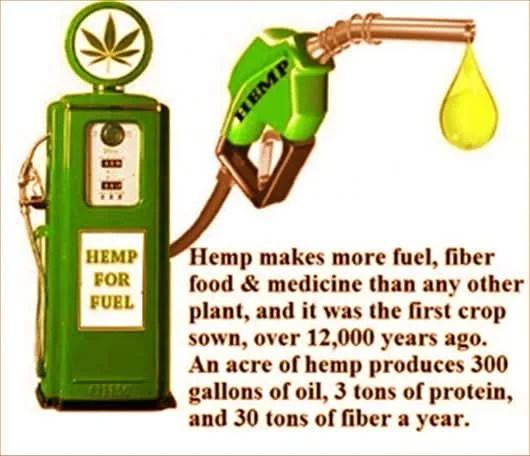
Hemp seeds a super food
Legalised Cannabis will generate employment and income
Legalise and Control Cannabis
Enrol to vote “YES”

Authorised by I. Britnell; 563 Worcester Street, Ch 8141*.2